In this article, we are going to compare three of the top most popular productivity systems in the world for price, effectiveness, and design. I have personally used each system on this list on its own for at least a year each, and definitely figured out some of the pros and cons with each system, so let's jump in.
1. Getting Things Done (GTD)
First on the list is GTD, or Getting Things Done. This productivity system popularized by David Allen has been around for many years and is probably the oldest system on the list. The essential parts consist of five steps: capture, clarify, organize, reflect, and engage. Let's break it down.
- Capture happens at the start of your day or week, where you write, record, or gather any and everything that has your attention into a collection tool. My tool of choice: a checkbox list on pen and paper.
- Clarify — Once you've feel like you've dumped out everything in your mind, it's time to clarify what each item means. Is it actionable? If so, decide the next action and project (if more than one action is required). If not, decide if it is trash, reference, or something to put on hold.
- Organize — Next, you organize what items you have left, putting reminders of your categorized content in appropriate places you'll remember to get it done.
- Reflect — Then, you reflect on your items repeatedly throughout the day, updating and reviewing your items to regain control and focus.
- Engage — Lastly, you engage. Simply do the items you've defined as worthy of your attention, and get them done.
Right off the bat, if you are looking to simply regain control of your life or find some organization without getting too complicated, GTD will just work. It was the first productivity system I used and it took me through my first highschool job. You do need to figure out what "collection tool" you are going to use, whether it's a pen and paper, a checklist app, or sticky notes.
| Category | Rating | Notes |
|---|---|---|
| Price | 5/5 | Free to start, especially with pen and paper |
| Effectiveness | 3/5 | After initial months, found it time-consuming with redundancy |
| Design | 1/5 | It's a concept — you make it what you want |
2. Full Focus Planner (Michael Hyatt)
The second productivity system in this list is the Full Focus Planner by Michael Hyatt. Honestly, right off the bat, this system changed my life, bar none. It was so easy to use and remember. GTD has five steps that I always have a hard time remembering, whereas the Full Focus Planner has been thoughtfully designed and created with ease of use in mind.
Also, GTD can result in a long, neverending to-do list, but I can attest that the Full Focus Planner really does eliminate long to-do lists. It actually makes productivity feel inspiring.
To use the Full Focus Planner, they actually give you a simple checklist inside the front page with how to get started. First, you set up the planner by filling in the first week or two of dates. Second, you start small and build, by beginning to use the daily pages, then the goals, weekly preview, and other pages as you gain confidence. And third, you make time in your day to plan by identifying your daily big 3 tasks, other tasks, and appointments every day. That's it. It's that simple.
| Category | Rating | Notes |
|---|---|---|
| Price | 2/5 | ~$40-50 per 90-day planner, or $125-160 annual subscription |
| Effectiveness | 4/5 | Really works, but guilt if you miss days |
| Design | 5/5 | Beautiful, easy to use, elegant, multiple color options |
3. BMSU Lifeplan (Business Made Simple)
Now, last on our list of world-class productivity systems is the BMSU lifeplan. Honestly, this one is a little bit different. Whereas GTD focuses on organizing your mind, and the Full Focus Planner makes it easy to plan goals, track them through the week, and set daily tasks, the BMSU lifeplan takes you through a more gripping journey.
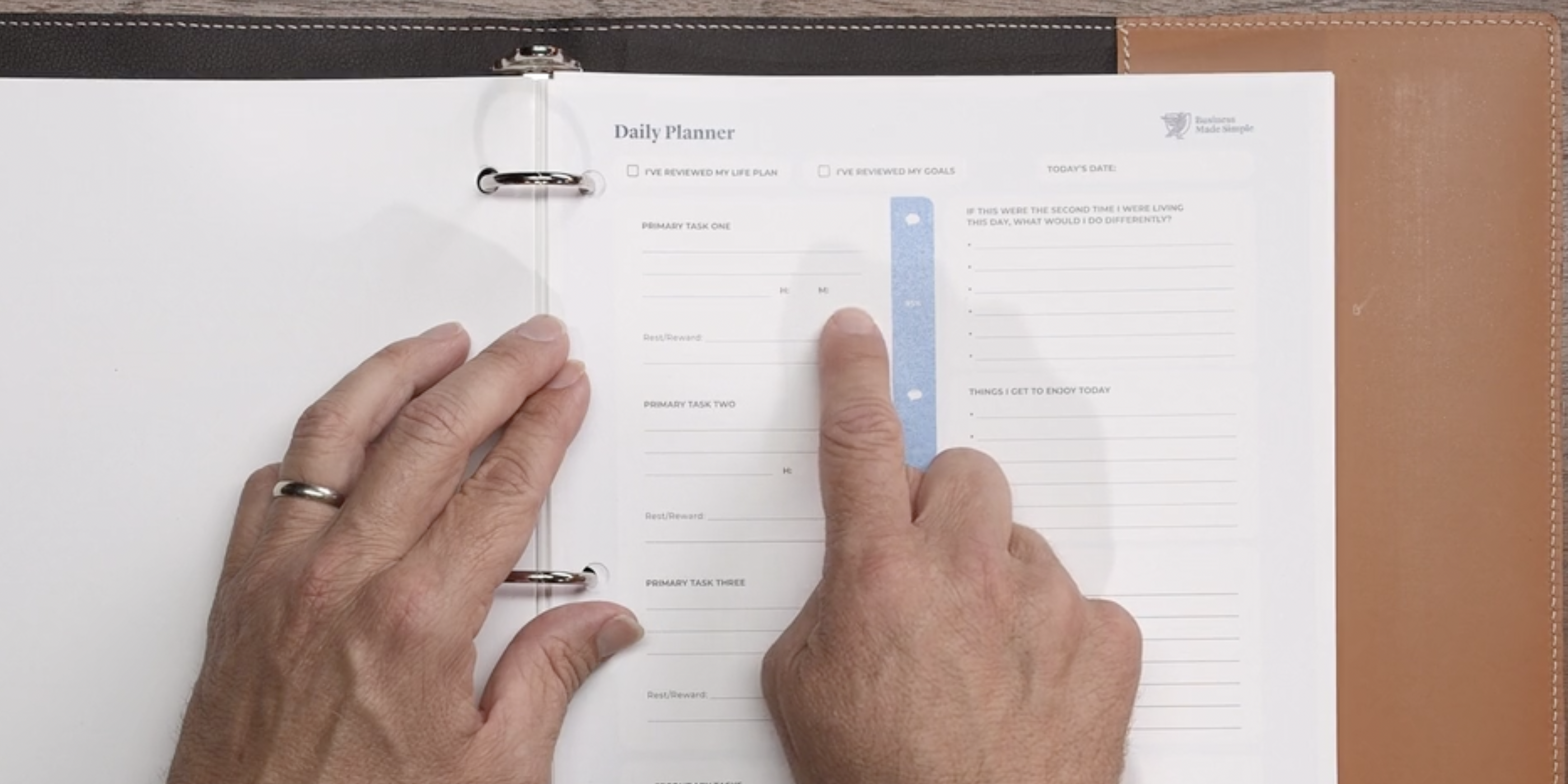
The team over at Business Made Simple actually walk you through step by step on how to setup a lifeplan in just a few hours. You start with writing your obituary, then a one sentence life summary of what you want to accomplish. Then you define your ten-year, five year, and one year vision, then you set three goals. Only three goals so that you remember every day what those goals are.
| Category | Rating | Notes |
|---|---|---|
| Price | 4/5 | $275/year, but you can continue using it without renewing |
| Effectiveness | 5/5 | No guilt if you miss days, flexible, undated pages |
| Design | 3/5 | Download and print yourself, need to source quality paper |
Which One Should You Choose?
If you are new to productivity, I'd recommend GTD to start your journey. It's fast to learn, easy to start, and free to use. If you are needing a more thought through accountable system that captures everything your brain doesn't, then Full Focus Planner might be for you.
If you need some direction in your life and are wanting to find your purpose, find meaning, or discover your passions with a proven plan that is super simple and easy to use, hands down, go for the BMSU lifeplan. You won't go wrong.
Question for the day: Are you thinking of improving your productivity? I'd love to hear your thoughts!